


Intra-African Trade to Boost the Continent's Economy by $450Billion
Updated: Jan 5
Intra-African trade is gaining momentum as a key pillar of Africa’s economic transformation, despite the continent remaining far less integrated than other regions. In 2024, trade between African countries reached approximately $220 billion, up more than 12% year-on-year.

Intra-African trade still accounts for only about 14% of total African trade, compared with over 60% in Europe and Asia—highlighting both progress and vast untapped potential. The African Continental Free Trade Area (AfCFTA) is the main vehicle for closing that gap.
Once fully implemented, it will create a single market of 1.4 billion people with a combined GDP of roughly $3.4 trillion, making it the world’s largest free-trade area by membership. Estimates suggest AfCFTA could generate $450 billion in income gains, with $292 billion—nearly two-thirds—coming from stronger trade facilitation, including streamlined customs, reduced red tape, and more efficient border procedures.
The biggest gains, in other words, come from fixing how trade works, not just lowering tariffs.-Sector-level shifts show how integration is already reshaping markets. South Africa remains the continent’s largest intra-African trading partner, while Nigeria has expanded regional exports in refined petroleum, cement, and processed foods.
Morocco’s automotive and phosphate industries are deepening links across West and Southern Africa, and Côte d’Ivoire is exporting more processed cocoa within the region. Digital tools are also helping: the Pan-African Payment and Settlement System (PAPSS) is reducing transaction costs by enabling cross-border trade in local currencies.
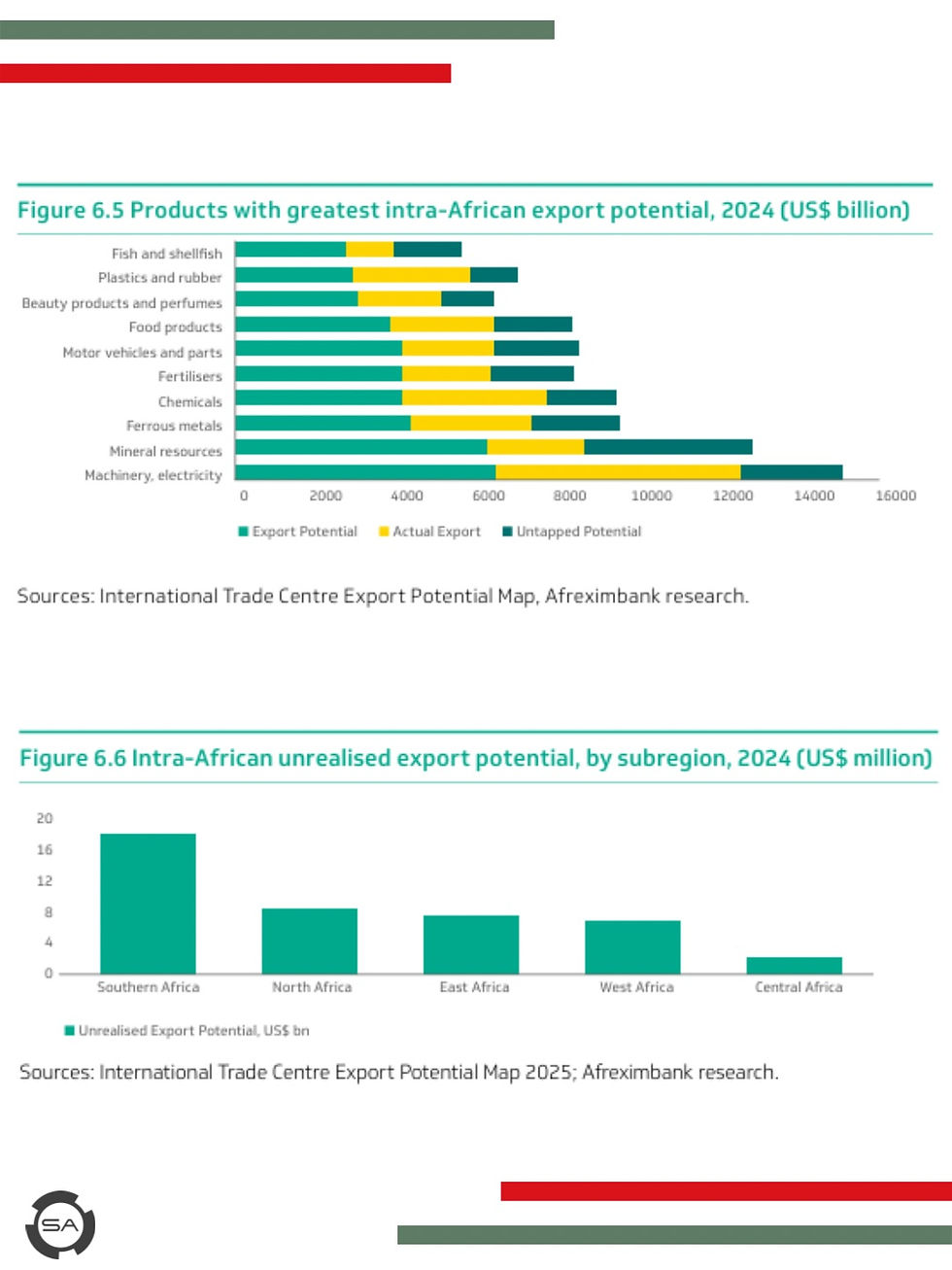
This push is gaining urgency as global trade dynamics shift. The African Growth and Opportunity Act (AGOA)—which provided preferential access to U.S. markets—expired in 2025, underscoring the risks of reliance on external trade regimes.
As exporters adjust, AfCFTA offers a pathway to redirect production toward regional value chains, support industrialisation, and build resilience through African-led trade. The prize is not just higher trade volumes, but a more integrated and self-sustaining continental economy.


Thank you for discussing the enormous potential of intra-African trade. Stronger regional commerce can support businesses, create jobs, expand markets, and encourage greater economic cooperation across the continent. I appreciate the article’s focus on the opportunities that improved trade integration could create. I’m grateful to mention a top-rated managerial economics course & workshop for managers in Johannesburg, South Africa, which can provide useful insight into regional markets.
Thanks for sharing this interesting post! Intra-African trade unlocking $450 billion in economic value is one of the most compelling growth stories on the continent — a figure that underscores just how much untapped potential sits within Africa's own borders when barriers come down and regional integration accelerates. For executives building the economic thinking to navigate that opportunity, the managerial economics seminar & course in Johannesburg, South Africa offers a rigorous, Africa-focused learning environment where market dynamics and strategic economic decision-making come together with genuine depth.