


Africa's Currencies Among World's Strongest Performers Against the U.S. Dollar
Africa’s currencies were among the world’s strongest performers in 2025, gaining sharply against the U.S. dollar as macroeconomic conditions stabilised and commodity markets surged.
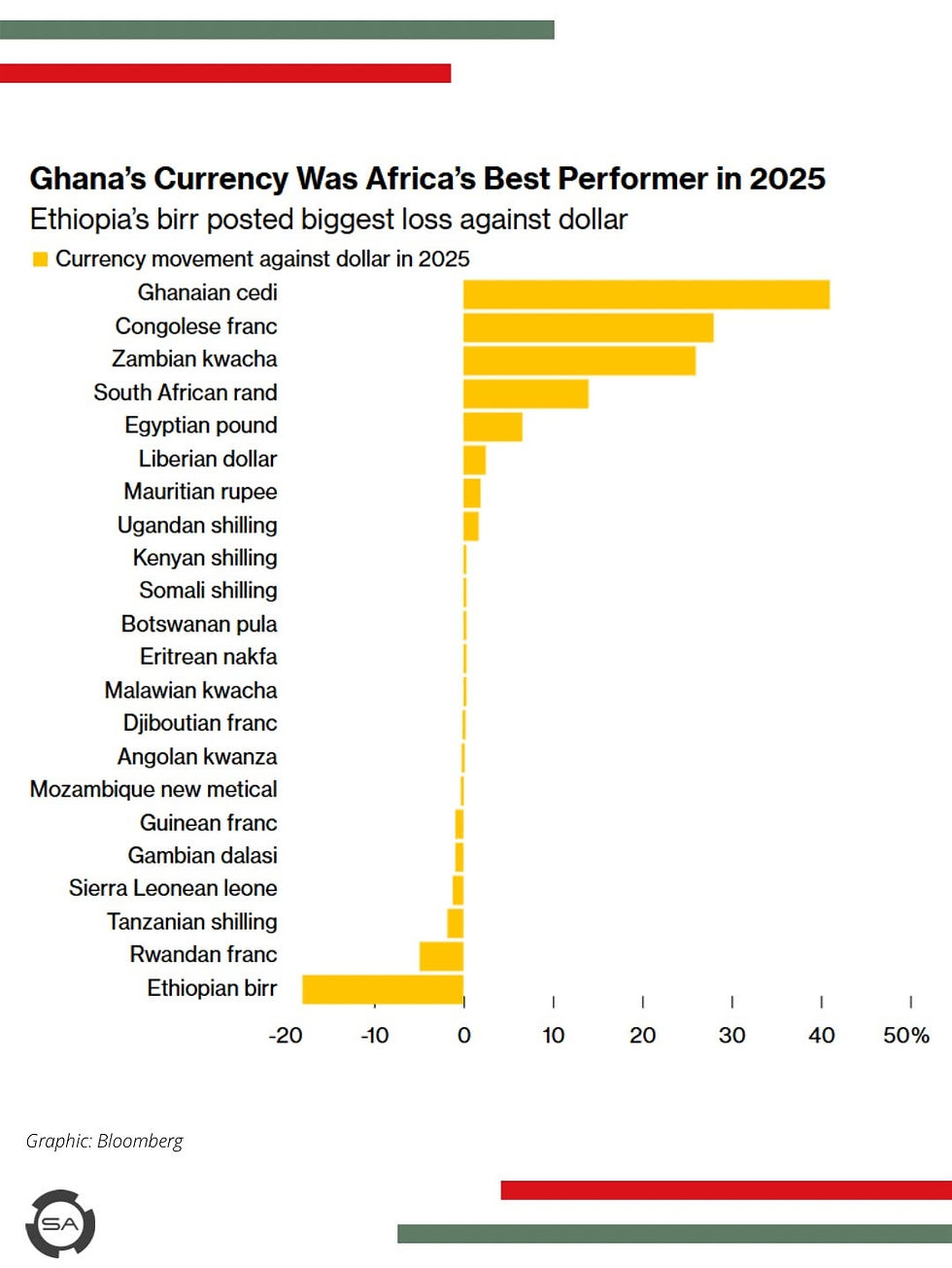
Tighter monetary policy, easing external imbalances, renewed investor appetite for frontier and emerging markets, and a weaker dollar all supported exchange rates.
This momentum was reinforced by a commodity boom: gold prices rose more than 60% on safe-haven demand amid geopolitical uncertainty and shifting rate expectations, while copper climbed over 40% as demand from renewable energy, data centres, and power grids tightened global supply.
Ghana stood out as the continent’s top performer, with the cedi appreciating nearly 41% against the dollar. The rally reflected improved fiscal discipline following debt restructuring, a firm central-bank stance, and stronger gold export earnings supported by central-bank buying and investor hedging.
Commodity tailwinds also lifted the Congolese franc, up about 35%, and Zambia’s kwacha, which gained roughly 28%, as copper export receipts surged on tight supply and accelerating global demand.
South Africa’s rand gained around 12%, benefiting from higher gold and platinum-group metal prices alongside incremental progress in energy availability and logistics.
Combined with a broadly weaker U.S. dollar, these factors helped attract portfolio inflows into Africa’s most liquid financial market, putting the rand on track for its strongest annual performance in roughly 16 years.
Not all currencies shared in the upswing. Ethiopia’s birr fell about 18% against the dollar, reflecting persistent foreign-exchange shortages, elevated inflation, and the slow pass-through of reform gains into currency markets.
Looking ahead, elevated gold and copper prices—supported by global uncertainty, constrained supply, and energy- and tech-driven demand—should continue to underpin external balances.
Longer-term currency resilience, however, will depend on converting today’s commodity windfalls into broader growth and more diversified export bases.


Comments